
Water Leak Repair Service in Austin, TX
A small leak can quietly raise your water bill and damage your property. Westmoreland Plumbing tracks down the source and repairs it.
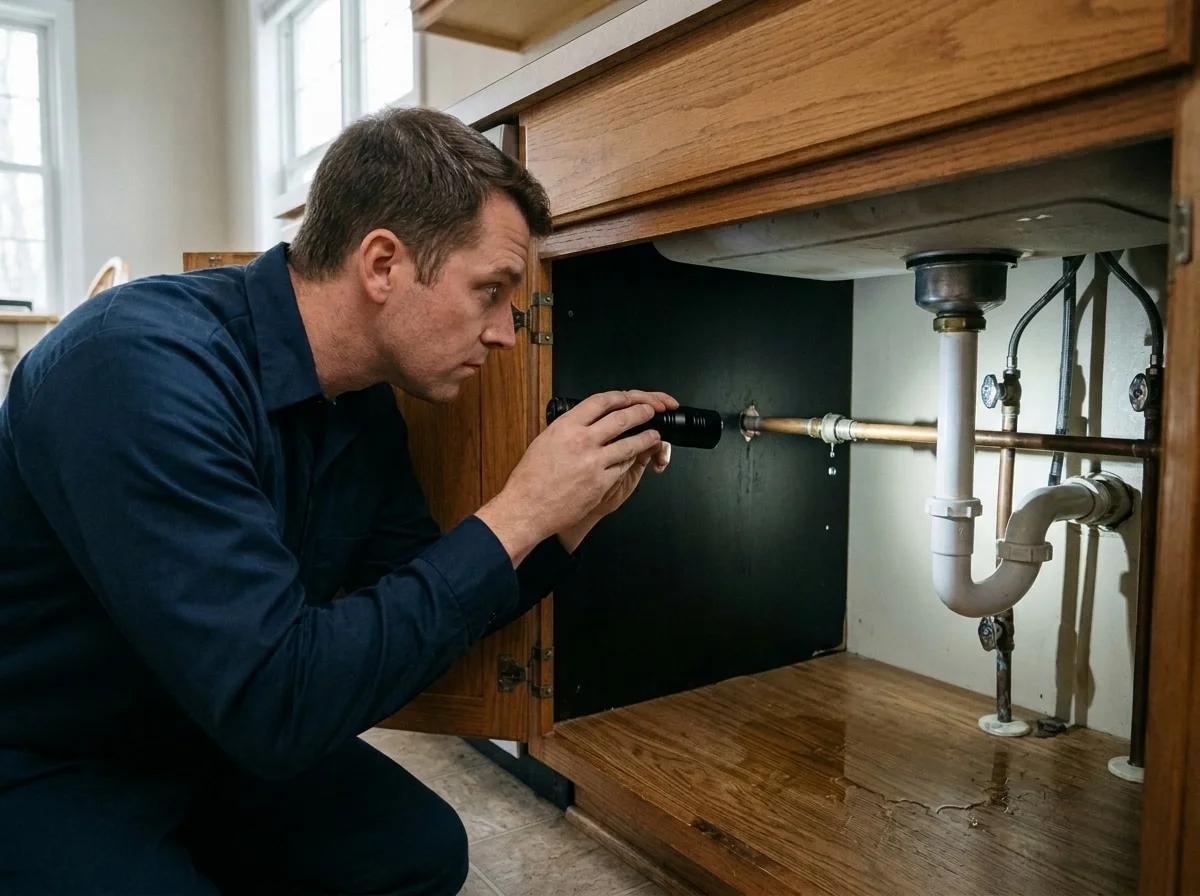
You should never overlook a leak in your home. Water finding its way out of a pipe can bring on water damage, corrosion, mold, and mildew, and you’ll also pay for every gallon that drips away. Westmoreland Plumbing has served Austin since 1976, and we provide water leak repair for homes and businesses. Most of the job is finding where the water is going, because the spot where a leak shows up often isn’t where it starts.
How to Tell If You Have a Leak
Your water meter is the simplest test, and Austin Water recommends it. Write down a reading, avoid using any water for a few hours, then read it again. If the number moved while nothing was running, water is going somewhere. Compare your current bill with the same months in past years as well, since a jump with no change in your routine is often the first sign.
If you’re an Austin Water customer, the My ATX Water portal can send alerts about continuous usage that could point to a leak. It’s worth signing up, because a constant flow overnight is hard to notice any other way. EPA WaterSense offers one more rule of thumb, as of its March 2026 update, that a family of four using more than 12,000 gallons a month could have a serious leak.
Signs of a Hidden Leak
The leaks that cost the most are the ones you can’t see. You might hear water running when every fixture in the house is off, or feel a warm patch on the floor where a hot water line runs below it. A musty smell behind a wall, a soft spot in the drywall, or a stain spreading across the ceiling can all mean a pipe has been leaking for a while.
Look outside, too. A patch of lawn that stays green and wet during a dry Austin summer can mean a line is leaking underground. Many homes here sit on concrete slabs, with lines running under or through them, so a leak below the slab may give you little more than a warm floor and a rising bill. Clay soil shrinks and swells with the weather, and that movement puts stress on whatever runs through it.
What to Do First
When water is actively spreading, stopping it comes first. Close the shutoff valve at the fixture if there is one, under a sink or behind a toilet. If you can’t find one or it doesn’t help, turn off the main valve for the building. It’s worth learning where yours is before you ever need it.
Move what you can out of the water’s path, and keep clear of any standing water near outlets or appliances. Then call us and tell us what you’re seeing. If you find water in the street or at the curb, the leak may be on the utility’s side, and Austin Water asks you to check its Leak Response Map and report it if it isn’t listed.
How We Find and Repair a Leak
We start with what you’ve noticed, because the details narrow things down quickly. Tell us where you’ve seen water or stains, what your bill has done, and whether the meter moves with everything turned off. Then we check the fixtures and the visible lines, and we work back from the symptom toward the source.
Once we’ve found where the water is getting out, Westmoreland Plumbing works out the best strategy to repair it, and you can ask us anything along the way. If you’re worried about other trouble in the system, we can look over the rest of your plumbing on the same visit, including possible leaks you haven’t noticed yet.
Whose Leak Is It
In Austin, the water meter marks the line. Austin Water owns and maintains the service line from the main to the meter box, and it says property owners are responsible for service lines past the meter and for internal plumbing. That means a leak between your meter and your house is yours to repair, even though it’s underground and out of sight.
Other cities and water providers around the area may set their own rules, so check with your provider if you’re outside Austin Water’s service area. Either way, we can help you work out where the leak is and what’s on your side of the meter.
What a Leak Really Costs
Small leaks add up faster than most people expect. EPA WaterSense reports that the average household’s leaks can account for more than 9,300 gallons of water wasted every year, and that nine percent of homes have leaks wasting 50 gallons or more every day. It also says that fixing easily corrected leaks can save homeowners about 10 percent on their water bills.
The water bill may be the smaller part of the cost. Moisture inside a wall feeds mold and mildew, and it can damage framing and finishes well before you see a stain. Repairing a leak also keeps fresh, clean water from going to waste, and that water seems to become more precious with each passing year.
Leaks Outside the House
Outdoor leaks are easy to miss, because the water soaks into the ground and never leaves a stain. EPA WaterSense says an irrigation system leak about 1/32 of an inch across can waste about 6,300 gallons of water per month. Soggy ground, a section of grass that grows faster than the rest, or a meter that keeps moving with the house shut off are all worth checking.
A leak between the meter and the house is on your side of the line in Austin, so it’s worth finding early. Tell us what you’re seeing outside, and we’ll help you work out where the water is going.
Common Leaks We Repair
Most of the leaks we see fall into a handful of categories, and each one calls for a different repair:
- Faucets and fixtures that drip or seep at the base
- Toilets that run or leak quietly into the bowl
- Pipes and fittings under sinks
- Corroded or broken pipes in a home or commercial building
Toilets deserve a special mention, because they can leak without a sound. EPA WaterSense says toilets can silently leak thousands of gallons a year, and it suggests replacing flappers at least every five years. Our skilled plumbers also troubleshoot any other part of your household system, so tell us about anything else that seems off while we’re there.
Questions About Water Leaks
How much does it cost to fix a water leak?
It depends on where the leak is and how easy it is to reach. A dripping faucet and a leak inside a wall are very different jobs. Call us with what you’re seeing, and we’ll talk through our rates and what the visit is likely to involve.
Do I need to shut off my water?
If water is spraying or spreading, yes. Turn off the shutoff at the fixture if there is one, or the main valve for the building if there isn’t. For a slow drip, you can usually leave the water on until we arrive.
Can you find a leak I can’t see?
We can look over your whole system for possible leaks while we’re there, and we’ll tell you what we find. If you’re noticing a slow drain or clog too, mention it, and we’ll check that on the same visit.
Is a small drip worth fixing?
Yes. EPA WaterSense says a faucet dripping once per second can waste more than 3,000 gallons a year, and a small drip can also signal a worn part that’s about to get worse. A plumbing repair can take care of it.
What Our Customers Say
See more reviewsWhen I called these guys after a failed pressure regulator valve, they came right out. They made a quick fix and hoped that would resolve the issue, sadly it did not. Not their fault. Called Tommy the next morning and he sent the guys right out despite a full schedule and got us all fixed up. Our water pressure is better than it’s been in years! So thankful for these guys!!
I’m a little outside their service area but had an emergency (leak filling a 5 gallon bucket every hour) and called them. Tommy had Sean to my house in less than an hour and he stopped the leak and bypassed the problem so we can still have water until our part arrives.
Quick response and good communication, upfront and itemized pricing. Tommy gave me some great self-serve plumbing advice for no charge. They will be my go-to plumbing service moving forward.